


Go Wild With Florida’s Wildlife!

By Susan & Simon Veness
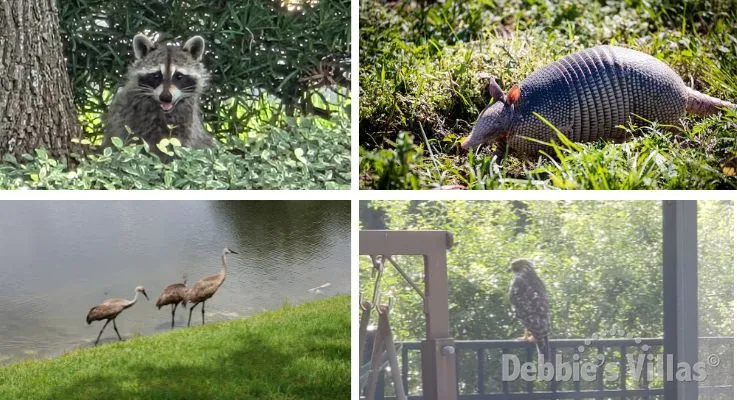
When was the last time you saw a raccoon in your neighbourhood? Or a possum, or a sandhill crane? Probably not an armadillo or a bobcat either, then. And there’s pretty much no chance you’ll come across an alligator, manatee or black bear. Add dolphins, ospreys, deer, bald eagles and several varieties of turtle to this list and you have the essence of Florida’s wildlife, one of the big surprises for our visitors amid the theme parks and other attractions.
It’s probably not what first attracts you to the Sunshine State, but we are here to tell you that it can be a captivating, thrilling and, yes, surprising element to any holiday in the Orlando area, which positively teems with wildlife, if you know where to look. And the bottom line is that you usually don’t have to look very far.
Majestic birdlife is common around the villa areas to the south and west of Kissimmee, and you should also keep your eyes open for the super-cute armadillos and raccoons, which often hang out in the semi-rural locations just a handful of miles from Disney and Co. And then there are several state parks and other wildlife preserves that are also worth checking out if your curiosity is piqued by these common-or-garden varieties of animal.
Stunning birdlife
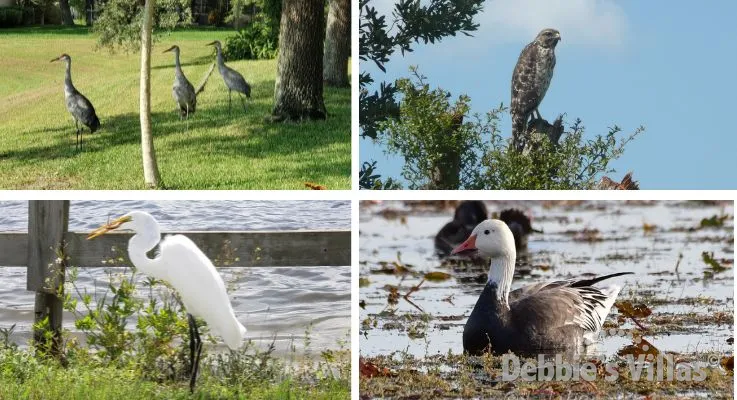
You can even start your wildlife watching from the back patio of your villa, especially if you have a retention pond nearby. These latter attract a wealth of egrets, herons, ibis and hawks, most of which have learned to thrive around the local residential areas. Great Blue herons often stalk the watery fringes in search of fish, frogs and lizards, as do Snowy, Cattle and Great Egrets, in addition to the seemingly ever-present anhingas, a variety of cormorant that locals tend to call the snake-bird for its sinuous neck. And you will often see great flocks of ibis pecking and poking their way through lawns and grassy verges. We call them the free aeration crew, and they can be quite comical to see in groups of 20 or 30.
The fact Florida is so full of food-rich lakes and ponds gives rise to this being a common stop-over for migratory birds as well as our full-time residents, hence both white pelicans and the massive sandhill cranes are a common sight for much of the year, while Swallow-tailed Kites and American Kestrels are other species to keep an eye out for in winter. The simple fact is you are likely to see most, if not all, of the above-mentioned birds at some stage in an average Orlando holiday, even around the theme parks at times. You just need to keep your eyes open.
Plenty of sea-life, too
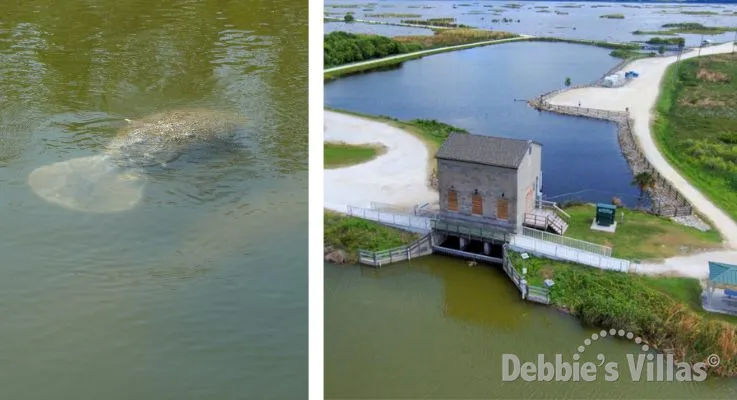
With the state’s semi-tropical climate, it stands to reason there is also a rich array of sealife on hand year-round, and you will definitely want to take advantage of day-trips to either coast to go on a dolphin cruise or manatee watching. The Thousand Islands section of the Cocoa Beach area (Atlantic Coast) is great for boating through these tranquil waterways that attract both dolphins and manatees, while jumping mullet are another amusing sight.
It’s definitely worth knowing that Crystal River (Gulf Coast) to the north-west of Orlando – and another ideal day’s excursion – is the only place in America where it is legal to swim with manatees, and that makes for a unique experience, especially in the winter months when hundreds can pack into places like the Three Sisters Springs and neighbouring Kings Bay. Check out the swim/paddle-with-manatees options on this link.
The Gulf Coast itself is packed with marine life expeditions, by boat, kayak and canoe, and the epi-centre of these options can be found in the St. Pete Beach area, where the intracoastal waterway is rich with sealife and there are numerous excursion possibilities. We always rate Dolphin Landings very highly for their style and longevity, as well as just super-cool yachts.
What about the gators?
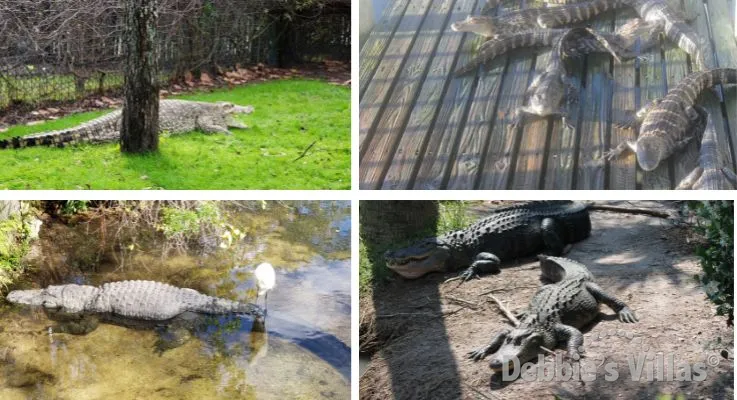
Glad you asked! Seeing Florida’s most famous denizen in its natural habitat remains one of the most thrilling and iconic sights of any Orlando holiday, and it stands to reason that you should want to check out the “locals” in various places. The fun attraction of Gatorland is an obvious starting point, as is Wild Florida, with its airboat rides and gator park, and you might also glimpse a gator or two on the guided bus tours at the Kennedy Space Center.
But, the real secret of gator discovery and gator watching can be found at arguably the best-value attraction in the whole of the Sunshine State. The Lake Apopka Wildlife Drive was the area’s best-kept secret when it opened in 2015 but now welcomes more than 200,000 visitors each year to this exceptional outpost of Florida’s native wildlife, including the ever-present gators. A beacon of environmental virtuosity, it is run by the St John’s River Water Management District as a pioneering exercise in wetlands restoration, with the feature one-way, 11-mile drive through a mosaic of wetlands, levees and canals, offering exceptional viewing opportunities both from your car and several stopping points.
It is located just 25 miles north of the Magic Kingdom, yet is a world away from the usual tourist frenzy. Part of the District’s 20,000-acre Lake Apopka North Shore restoration area, the wildlife drive has become a favourite for birders, nature lovers and families. With over 370 bird species recorded, including bald eagles, swallow-tailed kites and herons, it’s recognised as one of Florida’s top birding destinations. Along the route, it is usually easy to spot alligators sunning themselves on the canal banks or lurking in the lake itself, while there are occasional sightings of otters, turtles and even bobcats.
The Story of The Drive
Why does it deserve the ‘Best Value’ tag? Because the Wildlife Drive is absolutely free, as it is maintained as a Water District resource protection scheme. However, it is only open for vehicular access from 7am to 3pm on Fridays, Saturdays and Sundays, plus federal holidays.
More than a scenic destination, the property represents the District’s long-term commitment to environmental restoration and water resource protection. In 1996, under direction from the Florida Legislature, the District purchased former muck farms on the North Shore to support the restoration of Lake Apopka. Over time, these agricultural lands have been transformed into thriving wetlands, creating a network of habitats that support wildlife while improving water quality. Today, the area stands as a model of the District’s science-based, multi-benefit approach, integrating restoration, water resource protection and public access.
“The restoration of the Lake Apopka North Shore reflects years of innovation, dedication and hard work,” says the District’s Strategic Planning Basin Coordinator for the Ocklawaha River Basin, Jim Peterson. “The property was acquired to support the restoration of the state’s fourth-largest lake, and now the wildlife enjoys the habitat, and the public enjoys the wildlife viewing and recreation opportunities.”
The Wildlife Drive is something we have been happy to promote since it opened, and we can be sure that our UK visitors will be equally captivated by it, especially as you can take it all in from the comfort of your hire car. It’s dead convenient, but then that is Florida to a ‘T’!
*Simon and Susan Veness are Orlando-based travel experts and guidebook authors writing exclusively for Debbie’s Villas. *
Latest posts

How to Choose the Right Orlando Villa for Your Family
With so many Orlando villas to choose from, the secret is to decide what really matters to your family before you start searching.

Where To Find Great Fish & Chips in Orlando
Craving proper fish and chips while you’re in Orlando? From authentic British-style chippies serving crisp battered cod and chunky chips to Florida favourites and even an inventive Asian twist, Orlando has plenty to choose from.

When Is the Best Time of Year to Visit Orlando?
It’s one of the questions we’re asked most often: when is the best time of year to visit Orlando?

How To Do Halloween in Orlando
Welcome to Halloweenland! Yes, for the month of October, Orlando is the next best thing to one gigantic, fully-fledged All Hallows Eve theme park, featuring all manor of ghouls, goblins and ghastly goings-on, plus candy. Lots of candy.

Orlando British Fare! Get a Taste of Home in Orlando!
Craving a taste of home in Orlando? Discover the best British pubs, fish and chips, hearty breakfasts and classic comfort food across Central Florida.


